 Buddha Sutras |
 |
Mantras Sanskrit |
| Home | Introduction | Sutras | Translators | Mantras | Prayers | Sanskrit | Glossary | Email Us |
Buddha Sutras |
|
Mantras Sanskrit |
| Home | Introduction | Sutras | Translators | Mantras | Prayers | Sanskrit | Glossary | Email Us |
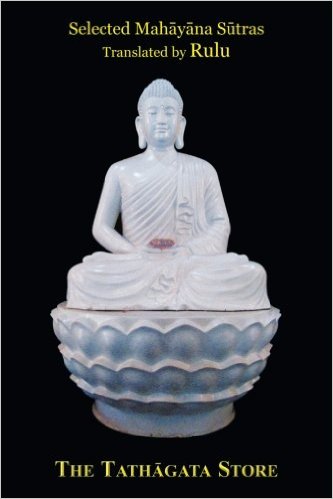 Book information on Home page
| An Shigao (2nd century) | | Lokakṣema (147–?) | | Saṅghavarman (3rd century) | | Zhu Fonian (4th–5th centuries) | | Kumārajīva (344–413) | | Buddhabhadra (359–429) | | Kālayaśas (383–442) | | Dharmakṣema (385–433) | | Guṇabhadra (394–468) | | Dharmodgata (4th–5th centuries) | | Dharmagatayaśas (5th–6th centuries) | | Saṅghapāla (460–524) | | Mandra (5th–6th centuries) | | Bodhiruci (5th–6th centuries) | | Paramārtha (499–569) | | Jñānayaśas (6th century) | | Vinītaruci (?–594) | | Xuanzang (600– or 602–664) | | Divākara (613–687) | | Śikṣānanda (652–710) | | Dharmacandra (653–743) | | Buddhatrāta (7th–8th centuries) | | Pramiti (7th–8th centuries) | | Amoghavajra (705–774) | | Prajñā (734–?) | | Fatian (?–1001) |
The continuation of the Dharma is credited not only to the Indian masters who took the teachings of the Buddha from India to China, but also to the Chinese masters who traveled to India to request for the sūtras and to carry them as a treasure back to China. All of them, with their elegant Chinese translations of the Sanskrit texts, made a crucial contribution to preserving and propagating the Dharma in China. Credit is also due to the Chinese emperors who revered the Buddhist masters and supported the Dharma. The life stories of a few of the masters related below in chronological order are based on WIKIPEDIA, the Free Encyclopedia, as well as on the 7-volume Foguang dacidian (佛光大辭典), or the Buddha’s Light Dictionary, published by Foguang Publishing.
An Shigao (安世高, 2nd century) was a prince of the kingdom of Anxi, the Arsacid Empire, in present-day northeastern Iran. He was famed for honoring his parents and having broad knowledge in astrology, medicine, and sacred texts. After his father’s death, he gave up his throne and became a Buddhist monk.
An Shigao arrived in Luoyang (洛陽), China’s capital, in 148, the second year of the Janho (建和) years of Emperor Huan (漢桓帝) of the Eastern Han Dynasty (25–220). He was given the surname An in Chinese to indicate his Anxi origin. Between 148 and 170, he translated many Sanskrit texts into Chinese, and fifty-five texts in the Chinese Canon are attributed to him, including the Repentance Sūtra (T24n1492). These texts cover basic Buddhist doctrine according to the Hīnayāna (Small Vehicle). An Shigao was the first to bring to China the Buddhist meditation technique of noting one’s ānāpāna (inhalation and exhalation).
During the turmoil near the end of Emperor Ling’s reign (漢靈帝, 168–89), An Shigao traveled to southern China. He is said to have died in Huiji (會稽), present-day Suzhou (蘇州), Jiangsu Province.
Lokakṣema (支婁迦讖 or 支讖, 147–?) was from Gandhāra, an ancient Indian kingdom in present-day Kashmir, northern Pakistan, and eastern Afghanistan area. He was given the surname Zhi in Chinese, because he was a descendant of the Kushan (貴霜) tribe of Yuezhi ethnicity (月氏). He arrived in Luoyang (洛陽), China’s capital, in 167, the last year of Emperor Huan (漢桓帝) of the Eastern Han Dynasty (25–220). During the last eleven years (178–89) of Emperor Ling (漢靈帝), he translated over twenty sūtras, of which twelve are extant.
Lokakṣema was the first Indian master who went to China to propagate Mahāyāna teachings. Among the texts he translated from Sanskrit into Chinese, the Sūtra of the Practice of Prajñā-pāramitā (T08n0224) was the earliest in a series of prajñā-pāramitā sūtras that laid the foundation of the Mahāyāna in China; the Sūtra of Infinite Pure Equal Enlightenment (T12n0361) was the earliest of the five versions of the Amitāyus Sūtra that arrived in China; both versions of the Sūtra of Pratyutpanna Buddha Sammukhāvasthita Samādhi (T13n0417–18) prescribe an intense three-month meditation retreat.
Saṅghavarman (康僧鎧, 3rd century) was supposedly an Indian. His Sanskrit name was translated into Chinese as Saṅgha armor, and he was given the surname Kang in Chinese, which may imply his ethnic origin from Kangjü (康居) nomads in central Asia. He went to Luoyang (洛陽), in 252, the fourth year of the Jiaping (嘉平) years of the Cao Wei Kingdom (220–65). He stayed at the White Horse Temple and translated, from Sanskrit into Chinese, the Sūtra of Amitāyus Buddha (T12n0360) and the Sūtra of the Elder Ugra. The latter is included in the Great Treasure Pile Sūtra (T11n0310) as its 19th sūtra, in fascicle 82. Scholars question the consistency in style between these two translations. Still, he has been recognized as the translator of the Sūtra of Amitāyus Buddha.
He is not to be confused with two other Saṅghavarmans. The same Sanskrit name was translated into Chinese as Saṅghabamo (僧伽跋摩) for one from India, who went to China in 433, and as Saṅghapāla (僧伽婆羅) for the other from Funan, who lived from 460 to 524.
Zhu Fonian (竺佛念, 4th–5th centuries) lived during the Eastern Jin Dynasty (東晉, 317–420). He was from Liangzhou (涼州), present-day Wuwei (武威), Gansu Province, China. He became a monk at an early age. Firm in his belief, he not only recited Buddhist sūtras but also dabbled in non-Buddhist texts.
During the Jianyuan years (建元, 365–85) of the Former Qin Dynasty (前秦, 350–94), staying in its capital, Chang-an, Zhu Fonian assisted Saṅghabhūti (僧伽跋澄) and Dharmanandi (曇摩難提) in translating Sanskrit texts into Chinese. During the Hongshi (弘始) years (399–416) of the Later Qin Dynasty (後秦, 384–417), he translated from Sanskrit into Chinese twelve sūtras in 74 fascicles, including the Sūtra of the Garland of a Bodhisattva’s Primary Karmas. However, some of his translations are lost.
Zhu Fonian died in Chang-an, age unknown. He was esteemed as a great translator during the Former and the Later Qin Dynasties.
Kumārajīva (鳩摩羅什, 344–413) means youth life. He is one of the four great sūtra translators in China. He lived during the turbulent period of the Sixteen Kingdoms (304–439), which posed a threat to the Eastern Jin Dynasty (東晉, 317–420). His father, Kumārāyana, was from a noble family in India, who went to Kucha (龜茲, or 庫車, in present-day Aksu Prefecture, Xinjiang, China) and married the king’s sister, Princess Jīva. From their union, Kumārajīva was born.
Jīva renounced family life when Kumārajīva was seven. Mother and son traveled in India, studying under renowned Buddhist masters. Even at such a young age, Kumārajīva had already committed to memory many sūtras and texts, and his name was heard throughout the five kingdoms of India. At twelve, he traveled with his mother to Turfan (吐魯番, an oasis city in Xinjiang, China), but the king of Kucha went to Turfan to ask him to return to Kucha. So he returned to his homeland and stayed there until his destiny called.
Fujian (苻堅), ruler of the Former Qin Kingdom (前秦) in China, had heard of the marvelous Kumārajīva and wanted to bring him to China. In 382, he sent his general Luguang (呂光) to conquer Kucha. Kucha fell the next year, and Luguang captured Kumārajīva. On their way to China, Luguang got the news that Fujian had been defeated at the Battle of the Fei River. Luguang then settled in Liangzhou (涼州), in present-day Gansu Province, and founded a state called Later Liang (後涼). For seventeen years, Kumārajīva was detained there. Finally, Yaoxing (姚興), ruler of Later Qin (後秦, 384–417), conquered Later Liang and took Kumārajīva to China.
In 401, Kumārajīva arrived in Chang-an (長安), China’s capital, and Yaoxing honored him as the Imperial Teacher and forced him to marry ten women for the purpose of producing descendants of his caliber. He stayed at the Xiaoyao Garden (逍遙園) and began his great translation work with a team of assistants. During the rest of his life, he translated, from Sanskrit into Chinese, seventy-four texts in 384 fascicles, including the Amitābha Sūtra (T12n0366), the Mahā-prajñā-pāramitā Sūtra (T08n0223), the Diamond Sūtra (T08n0235), the Heart Sūtra (T08n0250), the Lotus Sūtra (T09n0262), the Vimalakīrti-nirdeśa Sūtra (T14n0475), and the Brahma Net Sūtra (T24n1484), as well as treatises, such as the Mahā-prajñā-pāramitā-śāstra (T25n1509), the Mūlamadhyamaka-kārikā (T30n1564), and the Dvādaśanikāya-śāstra (T30n1568), authored by Ācārya Nāgārjuna (龍樹菩薩, circa 150–250).
Kumārajīva’s fluid and elegant translations greatly contributed to the propagation of the Dharma in China. Before his death, he said that if his translations were truthful, his tongue would not be destroyed by fire. After cremation of his body, indeed, his tongue was found intact.
Buddhabhadra (佛馱跋陀羅, 359–429) means enlightenment worthy. Born in northern India, he was a descendent of King Amṛtodana, who was the youngest of the three uncles of Śākyamuni Buddha (circa 563–483 BCE). He renounced family life at age seventeen and became a monk. Studying hard, he mastered meditation and the Vinaya.
In 408, the tenth year of the Hongshi (弘始) years of the Later Qin Dynasty (後秦 or 姚秦, 384–417), one of the Sixteen Kingdoms (304–439), he went to its capital, Chang-an. The illustrious translator Kumārajīva (鳩摩羅什, 344–413) had arrived there in 401. However, Buddhabhadra did not like Kumārajīva’s students. Together with his own forty-some students, he went to the Lu Mountain (廬山, in present-day Jiangxi Province) and stayed with Master Huiyuan (慧遠, 334–416), the first patriarch of the Pure Land School of China.
In 415, the eleventh year of the Yixi (義熙) years of the Eastern Jin Dynasty (東晉, 317–420), Buddhabhadra went south to its capital, Jiankong (建康), present-day Nanjing, Jiangsu Province. He stayed at the Daochang Temple (道場寺) and began his translation work. Altogether, he translated from Sanskrit into Chinese thirteen texts in 125 fascicles. For example, texts 376 and 1425 were translated jointly by him and Faxian (法顯, circa 337–422). Text 376 (T12n0376) in 6 fascicles is the earliest of the three Chinese versions of the Mahāparinirvāṇa Sūtra; text 1425 (T22n1425) in 40 fascicles is the Chinese version of the Mahāsaṅghika Vinaya. Texts 278 and 666 were translated by him alone probably between years 418 and 421. Text 278 (T09n0278) is the 60-fascicle Chinese version of the Mahāvaipulya Sūtra of Buddha Adornment (Buddhāvataṁsaka-mahāvaipulya-sūtra); text 666 (T16n0666) in one fascicle is the first of the two extant Chinese versions of the Mahāvaipulya Sūtra of the Tathāgata Store.
In 429, the sixth year of the Yuanjia (元嘉) years of the Liu Song Dynasty (劉宋, 420–79), Buddhabhadra died, at age seventy-one. People called him the Indian Meditation Master. He is one of the eighteen exalted ones of the Lu Mountain.
Kālayaśas (畺良耶舍, 383–442) means time renown (時稱). He was from India and was accomplished in the Vinaya and the Abhidharma, especially in meditation. In 424, the first year of the Yuanjia (元嘉) years of the Liu Song Dynasty (劉宋, 420–79), he went to Jianye (建業), present-day Nanjing, Jiangsu Province, and stayed at the Daolin Ashram (道林精舍), near the Zhong Mountain (鍾山).
He translated, from Sanskrit into Chinese, the Sūtra of Visualization of Amitāyus Buddha (T12n0365) and the Sūtra of Visualization of Bodhisattvas Medicine King and Medicine Superior (T20n1161). In 442, he visited some areas of Sichuan Province and expounded the Dharma to the multitudes. He died soon after his return, at the age of sixty.
Dharmakṣema (曇無讖, 385–433) means Dharma prosperity. He was born into a Brahmin family in central India. At an early age he started the five studies and learned the Hīnayāna doctrine. He became very eloquent and answered questions most convincingly. Later he encountered a meditation master called White Head, who gave him the Sanskrit text of the Mahāparinirvāṇa Sūtra written on tree barks, and he turned to studying the Mahāyāna doctrine. At age twenty, he was able to recite over two million words from Mahāyāna and Hīnayāna texts. Versed in mantra practice, he was well regarded by the king. People called him Great Mantra Master.
Dharmakṣema, passing Kophen (罽賓, an ancient kingdom, also called Gandhāra, in present-day Kashmir, northern Pakistan, and eastern Afghanistan area) and Kucha (龜茲, or 庫車, in present-day Aksu Prefecture, Xinjiang, China), went to Dunhuang (敦煌), a major stop on the ancient Silk Road, in present-day Gansu Province, China. He took with him the Sanskrit texts of Bodhisattva precepts and the first five chapters of the Mahāparinirvāṇa Sūtra. In 412, the first year of the Xuanshi (玄始) years of the Northern Liang Dynasty (北涼, 397–439), one of the Sixteen Kingdoms (304–439), he was invited by its king, Mengxun (蒙遜), to stay in his capital, Guzang (姑臧), present-day Wuwei (武威), in Gansu Province, China.
After studying Chinese for three years, Dharmakṣema translated from Sanskrit into Chinese the first five chapters of the Mahāparinirvāṇa Sūtra. His translation was recorded by Huisong (慧嵩) and Daolang (道朗). Then he went to the kingdom of Yütian (于闐), or Khotan (和闐), present-day Hetian (和田), in Xinjiang, China, acquired the Sanskrit texts of the rest of the chapters, and translated them into Chinese. His translation of this sūtra is included in the Chinese Canon as text 374 (T12n0374), comprising thirteen chapters in 40 fascicles. It is referred to as the northern version of the Mahāparinirvāṇa Sūtra, and is the popular version.
In addition, he translated, from Sanskrit into Chinese, the Book of Bodhisattva Precepts (T24n1500), the Sūtra of the Bodhisattva Ground (T30n1581) in 10 fascicles, the Sūtra of the Upāsaka Precepts (T24n1488) in 7 fascicles, the Sūtra of the Great Cloud (T12n0387) in 6 fascicles, the Sūtra of the Golden Radiance (T16n0663) in 4 fascicles, most chapters in the Mahāvaipulya Sūtra of the Great Collection (T13n0397) in 60 fascicles, and more.
Dharmakṣema traveled west, aiming to find the last two fascicles of the Mahāparinirvāṇa Sūtra. Meanwhile, King Taiwu (太武帝) of the Northern Wei Dynasty (北魏, 386–534) sent an emissary to invite Dharmakṣema to visit him. Unwilling to let King Taiwu have Dharmakṣema, King Mengxun had Dharmakṣema, who was but forty-nine, assassinated on his journey.
The last two fascicles of the sūtra he sought were translated into Chinese in the Tang Dynasty (618–907) by Jñānabhadra (若那跋陀羅, dates unknown), and is included in the Chinese Canon as text 377 (T12n0377).
Text 376 (T12n0376) is a 6-fascicle version of the Mahāparinirvāṇa Sūtra, which was translated from Sanskrit into Chinese by Faxian (法顯, circa 337–422) and Buddhabhadra (佛陀跋陀羅, 359–429). Then Huiyan (慧嚴, 363–443) and others in southern China under the rule of the Liu Song Dynasty (劉宋, 420–79) edited texts 374 and 376 into text 375 (T12n0375), comprising twenty-five chapters in 36 fascicles. This text is referred to as the southern version of the Mahāparinirvāṇa Sūtra. These three texts sparked the Nirvāṇa School of China.
Guṇabhadra (求那跋陀羅, 394–468) means merit worthy (功德賢). He was from central India. Being in the Brahmin caste, he started the five studies as a child, and learned astrology, literature, medicine, and mantra practices. After studying the A Heart Treatise on the Abhidharma, he turned to the teachings of the Buddha, renounced family life, and became a fully ordained monk.
Guṇabhadra first studied the Tripiṭaka of the Small Vehicle, then Mahāyāna teachings. With profound understanding of the Mahā-Prajñā-Pāramitā Sūtra and the Mahāvaipulya Sūtra of Buddha Adornment, he began to teach. He even converted his father to Buddhism.
In 435, the twelfth year of the Yuanjia (元嘉) years of the Liu Song Dynasty (劉宋, 420–79), Guṇabhadra went to China by sea. Emperor Wen (文帝) sent an emissary to welcome and take him to the Qihuan Temple (祇洹寺) in Jiankang (建康), present-day Nanjing, Jiangsu Province. With the help of Huiyan (慧嚴), Huiguan (慧觀), and student monks, he translated the Saṁyukta Āgama (T02n0099) in 50 fascicles.
Guṇabhadra’s life in China spanned the reigns of three emperors—Wen, Xiaowu, and Ming (文帝、孝武帝、明帝)—and he was highly revered by all of them. Because of his contribution to the Mahāyāna teachings, people called him Mahāyāna. Altogether, he translated, from Sanskrit into Chinese, fifty-two sūtras in 134 fascicles, including the Sūtra of the Great Dharma Drum (T09n0270) in 2 fascicles, the Sūtra of Śrīmālā’s Lion’s Roar (T12n0353) in one fascicle, the Sūtra of Aṅgulimālika (T02n0120) in 4 fascicles, the Laṅkāvatāra Sūtra (T16n0670) in 4 fascicles, and the mantra for rebirth in Amitābha Buddha’s Pure Land (Mantra 5 on this website). Guṇabhadra died in 468, at the age of seventy-five. On the day he died, he saw celestial flowers and the holy images of Amitābha Buddha and His retinue.
Dharmodgata (曇無竭, 4th–5th centuries) was from Huanglong (黃龍), present-day Chaoyang (朝陽), Liaoning Province, and his family name was Lee. He became a novice monk when he was just a child. He studied hard, observing the precepts and reciting sūtras, and was well regarded by his teachers. Inspired by the example of Dharma master Faxian (法顯, circa 337–422), who went to India in 399 and brought back Sanskrit texts in 413, Dharmodgata vowed to seek the Dharma even at the cost of his life.
In 420, the first year of the Yongchu (永初) years of the Liu Song Dynasty (劉宋, 420–79), Dharmodgata set out for the western country, together with twenty-five monks who shared his aspiration. They carried with them banners and ritual objects for making offerings as well as food and utensils.
The team passed Khocho (高昌, in present-day Turfan Prefecture, Xinjiang, China), Kucha (龜茲, or 庫車, in present-day Aksu Prefecture, Xinjiang, China), and other kingdoms. Only thirteen members of the team survived climbing a cliff on their way. After crossing the snow mountain, they arrived in Kophen (罽賓, an ancient kingdom, also called Gandhāra, in present-day Kashmir, northern Pakistan, and eastern Afghanistan area). They made obeisance to the Buddha’s begging bowl and received the Sanskrit text of the Sūtra of the Prophecy Bestowed upon Avalokiteśvara Bodhisattva (T12n0371). The team stayed there for over a year, learning Sanskrit and studying Sanskrit texts.
The team continued on west and visited the Yuezhi country (月氏, the moon people, an Indo-European people, who had established the Kushan Empire, which at its height stretched from what is now Tajikistan to Afghanistan, Pakistan, and down into the Ganges river valley in northern India), where they paid homage to a relic of the Buddha, His head bone. Then they went to northern India, present-day Pakistan, and stayed at the Pomegranate Temple for three months, passing the summer. At this temple in India, Dharmodgata accepted the complete monastic precepts and became a fully ordained monk.
Trudging south toward Śrāvastī in central India, Dharmodgata and his team crossed unforgiving terrain and relied on sugar for food. Only five of the thirteen-member team survived the ordeal. Throughout the hardships, Dharmodgata never forgot the sūtra that he was carrying with him. By invoking Avalokiteśvara Bodhisattva’s help, Dharmodgata and his surviving team escaped the perils of raging elephants and then of buffaloes.
The team continued to travel in India for several years, paying homage to the sacred sites of the Buddha and visiting with illustrious masters. Finally, departing from southern India, they undertook their return journey by sea, aboard a merchant ship. Crossing the Indian Ocean and the South China Sea, they safely arrived in Guangzhou (廣州), Guangdong Province. Dharmodgata stayed in that area, propagating the Dharma until his death.
It is remarkable that Dharmodgata had gone to India, seeking the Dharma, about two hundred years earlier than Dharma Master Xuanzang (玄奘, 600– or 602–64). However, his book on his adventurous pilgrimage had been lost.
Dharmagatayaśas (曇摩伽陀耶舍, 5th–6th centuries) means Dharma come to renown (法生稱). He was a Buddhist monk from central India, who could write Chinese. In 481, the third year of the Jianyuan (建元) years of the Xiao Qi Dynasty (蕭齊, 479–501, second of the four successive Southern Dynasties), at the Chaoting Temple (朝亭寺) in Guangzhou (廣州), Guangdong Province, he translated, from Sanskrit into Chinese, the Sūtra of Immeasurable Meaning (T09n0276). Nothing more is known about him.
Saṅghapāla (僧伽婆羅, 460–524), also called Saṅghavarman, was a Tripiṭaka master from Funan (扶南), a pre-Angkor Indianized kingdom (present-day Cambodia) located in the southern portion of the Indochina Peninsula in Southeast Asia. An intelligent child, he renounced family life at fifteen and studied the Abhidharma, the collection of treatises on the Dharma. After he became a fully ordained monk, he delved into the Vinaya.
He went to China by sea during the Southern Qi Dynasty (南齊, 479–502) and stayed in the Zhengguan Temple (正觀寺) in the capital city, Jiankang (建康), present-day Nanjing, Jiangsu Province, where he studied vaipulya sūtras and mastered several languages.
Then the Southern Qi Dynasty was replaced by the Southern Liang Dynasty (南梁, 502–57). In 503, the second year of the Tianjian (天監) years, Mandra (曼陀羅仙, 5th–6th centuries), also a Tripiṭaka master from Funan, arrived in Jiankang. In 505, with the support of Emperor Wu (梁武帝), Saṅghapāla and Manda began to translate Sanskrit texts into Chinese. In 520, several learned Chinese monks participated in their work and recorded their translations.
Saṅghapāla translated many texts. Some he did jointly with Manda but some he did by himself, such as the Sūtra of the Ten Dharmas of the Mahāyāna (T11n0314), the Sūtra of Entering the States of All Buddhas Adorned with Wisdom (T12n0358), the Sūtra of Mañjuśrī’s Questions (T14n0468) in 2 fascicles, the Mahāyāna Sūtra of the Jewel Cloud (T16n0659) in 7 fascicles, and more. In 524, Saṅghapāla died at the age of sixty-five.
Mandra (曼陀羅仙, 5th–6th centuries) was a Tripiṭaka master from Funan (扶南), a pre-Angkor Indianized kingdom located around the Mekong delta. In 503, the second year of the Tianjian (天監) years during the Southern Liang Dynasty (502–57), Mandra arrived in Jiankang (建康), present-day Nanjing, Jiangsu Province. With the support of Emperor Wu (梁武帝), he helped Saṅghapāla (僧伽婆羅, 460–524), who was also from Funan, translate Sanskrit texts into Chinese. In 506, Mandra translated the Sūtra of Mahā-Prajña-Pāramitā Pronounced by Mañjuśrī Bodhisattva (T08n0232). Nothing more is known about him.
Bodhiruci (菩提留支, 5th–6th centuries) means bodhi splendor. A Buddhist master from northern India, he was versed in mantra practices and the Tripiṭaka. Aspiring to propagate the Dharma, in 508, the first year of the Yongping (永平) years of the Northern Wei Dynasty (北魏, 386–534, the first of the five successive Northern Dynasties), he arrived in its capital, Luoyang (洛陽). Emperor Xuanwu (北魏宣武帝) valued him highly and commanded him to stay in the Yongning Temple (永寧寺) to translate Sanskrit texts into Chinese, and he translated thirty-nine texts in 127 fascicles. The sūtras he translated include the Diamond Sūtra (T08n0236) in one fascicle, the Sūtra Pronounced by Mahāsatya, a Nirgranthaputra Master (T09n0272) in 10 fascicles, the Sūtra of Buddha names (T14n0440) in 12 fascicles, the Sūtra of Neither Increase Nor Decrease (T16n0668) in one fascicle, the 10-fascicle version of the Laṅkāvatāra Sūtra (T16n0671), the Sūtra of the Profound Secret Liberation (T16n0675) in 5 fascicles, and the Dharma Collection Sūtra (T17n0761) in 6 fascicles. The treatises he translated include A Treatise on the Sūtra of the Ten Grounds (T26n1522) in 12 fascicles, A Treatise on the Great Treasure Pile Sūtra (T26n1523) in 4 fascicles, and the Upadeśa on the Sūtra of Amitāyus Buddha (T26n1524) in one fascicle. After 537, Bodhiruci was not seen again.
Bodhiruci expressed his unique view on classification of the Buddha’s teachings. Based on the Mahāparinirvāṇa Sūtra (T12n0374), he said that, for the first twelve years, the Buddha gave only half-worded teachings, followed afterward by fully-worded teachings. Bodhiruci proposed the one-tone theory, saying that the Buddha pronounces teachings in one tone, and sentient beings come to a variety of understandings according to their capacities. Moreover, based on the Laṅkāvatāra Sūtra, he held that one’s enlightenment can be immediate or gradual.
Bodhiruci and Ratnamati (勒那摩提, 5th–6th centuries) from central India jointly translated from Sanskrit into Chinese A Treatise on the Sūtra of the Ten Grounds (Daśa-bhūmika-sūtra-śāstra), written by Vasubandhu (世親, circa 320–80). Then Bodhiruci’s students in northern China established the Ground Treatise School (地論宗), and Ratnamati’s students in southern China established their school with the same name. Although both paths of this school were founded on Vasubandhu’s treatise, they differed in their views of the nature of ālaya consciousness (ālaya-vijñāna). The northern path viewed ālaya consciousness as an impure consciousness and upheld dependent arising of dharmas from ālaya consciousness, while the southern path viewed ālaya consciousness as one’s inherent pure mind, one’s Tathāgata store (Tathāgata-garbha), and upheld dependent arising of dharmas from dharma nature (dharmatā), which is true suchness. Then the northern path merged into the Parigraha Treatise School (攝論宗, see this school in Paramārtha’s biography). The southern path stood as the orthodox Ground Treatise School for some time, and then merged into the Huayan School.
Because Bodhiruci gave Tanluan (曇鸞, 476–542 or after 554) a copy of the Chinese version of the Sūtra of Visualization of Amitāyus Buddha (T12n0365), Tanluan dedicated the rest of his life to the study, practice, and dissemination of Pure Land teachings. Therefore, Bodhiruci is also revered as a patriarch of the Pure Land School.
Paramārtha (真諦, 499–569) means the highest truth. He was from Ujayana, the capital of Avanti, in northwestern India. He belonged in the Brahmin caste, and his family name was Bhārata. Intelligent and eloquent, in his youth he visited many kingdoms, studied under various teachers, and became versed in the four Vedas. He also studied the Tripiṭaka and mastered the Mahāyāna doctrine.
In 546, the first year of the Zhongdatong (中大同) years of Emperor Wu (梁武帝) of the Southern Liang Dynasty (南梁, 502–57, the third of the four successive Southern Dynasties), Paramārtha arrived in Nanhai County (南海郡), in present-day southern Guangdong Province, bringing with him 240 folios of Sanskrit texts. To see the emperor in his capital city, Jianye (建業), present-day Nanjing, Jiangsu Province, Paramārtha traveled intermittently for two years. Upon his arrival in 548, Emperor Wu, a devout Buddhist, revered him and settled him in the palace to do translation work. However, in 549, a rebellion broke out, Jianye fell, and Emperor Wu starved to death in prison.
Then Paramārtha went south, moving from province to province. Wherever he stayed, he continued to translate Sanskrit texts into Chinese. In the twenty-three years between his arrival in China in 546 during the Southern Liang Dynasty and his death in 569 during the Southern Chen Dynasty (南陳, 557–89, the fourth and last of the Southern Dynasties), Paramārtha translated into Chinese sixty-four texts in 278 fascicles, which were only a portion of the Sanskrit texts he brought to China. Of the sixty-four Chinese texts, only thirty are extant. Paramārtha, Kumārajīva (鳩摩羅什, 344–413), Xuanzang (玄奘, 600– or 602–64), and Yijing (義淨, 635–713) are known in China as the four great translators.
Paramārtha translated many sūtras from Sanskrit into Chinese. For example, in 557, he translated the Sūtra of the Unsurpassed Reliance (T16n0669) in 2 fascicles; in 562, he translated the Diamond Sūtra (T08n0237) in one fascicle; in 563, he translated the Sūtra of the Dharma Door with a Broad Meaning (T01n0097) in one fascicle. However, his translation of the Sūtra of the Golden Radiance has been lost.
Paramārtha also translated from Sanskrit into Chinese many treatises, among which the most significant are texts 1559, 1593, 1595, 1610, and 1666. He is revered as the founding patriarch of two Chinese schools. The Abhidharma School (毗曇宗) was founded on text 1559 (T29n1559) in 22 fascicles, which is the Chinese version of Vasubandhu’s (世親, circa 320–80) A Commentary on the Treasury of the Abhidharma (Abhidharma-kośa-bhāṣya). The Parigraha Treatise School (攝論宗) was founded on texts 1593 and 1595. Text 1593 (T31n1593) in 3 fascicles is one of the three Chinese versions of Asaṅga’s (無著, circa 310–90) A Treatise on Adopting the Mahāyāna (Mahāyāna-saṁparigraha-śāstra); text 1595 (T31n1595) in 15 fascicles is one of the three Chinese versions of Vasubandhu’s Mahāyāna-saṁgraha-bhāṣya, his commentary on Asaṅga’s treatise. This school held that one has nine consciousnesses, of which the eighth consciousness, ālaya consciousness, is false, and the ninth consciousness, amala consciousness, is true and eternal. Then in the Tang Dynasty (618–907), the Abhidharma School merged into the Kośa School (俱舍宗), founded on text 1558 (T29n1558) in 30 fascicles, which is the Chinese version of Vasubandhu’s A Treatise on the Treasury of the Abhidharma (Abhidharma-kośa-śāstra), translated from Sanskrit by Xuanzang; the Parigraha Treatise School merged into the Dharma-Appearance School (法相宗), also called the Consciousness-Only School.
Text 1610 (T31n1610) in 4 fascicles is the Chinese version of Vasubandhu’s A Treatise on Buddha Nature (Buddhagotra-śāstra). Text 1666 (T32n1666) in one fascicle is the earlier of the two Chinese versions of A Treatise on Eliciting Faith in the Mahāyāna (Mahāyāna-śraddhotpāda-śāstra), attributed to Aśvaghoṣa (馬鳴, circa 100–60) from central India. These two treatises, which discuss Buddha nature, true mind, inherent awareness, ālaya consciousness, and the Tathāgata store (Tathāgata-garbha), are highly valued by all Buddhist schools of China.
Jñānayaśas (闍那耶舍, 6th century), also called Jinayaśas, was a Tripiṭaka Master from Magadha, an ancient kingdom in central India. He went to China in the Northern Zhou Dynasty (557–81, the last of the five Northern Dynasties), together with his students Jñānagupta (闍那崛多, 523–600) and Yaśogupta (耶舍崛多, dates unknown). In 599 or 560, the Wucheng (武成) year of Emperor Ming (北周明帝), they went to the capital city, Chang-an (長安). They stayed at the Temple of the Four God-Kings (四天王寺) and translated Sanskrit texts into Chinese.
Jñānayaśas translated the Sūtra of Achieving a Clear Understanding of the Mahāyāna (T16n0673) in 2 fascicles, and chapter 64 of the Sūtra of Great Clouds. He translated this chapter “Praying for Rain” twice, based on two similar Sanskrit texts. His two translations are preserved as texts 992 and 993 (T19n0992–93). Sanskrit texts of the other chapters of this sūtra were unavailable.
Vinītaruci (毘尼多流支, ?–594) means subdued pleasure (滅喜). He was born in the sixth century, in southern India. In 574, the sixth year of the Taijian (太建) years of the Chen Dynasty (557–89, the last of the four Southern Dynasties), he went to Chang-an (長安), China, in search of the Dharma. He met Sengcan (僧璨, dates unknown), the third patriarch of the Chán School, in Ye County (鄴縣), Hunan Province, who imparted to him the Mind Seal and commanded him to go to southern China to deliver the multitudes.
He then went down south to Guangdong Province and became the abbot of the Zhizhie Temple (制止寺) in the city of Guangzhou (廣州). There he translated, from Sanskrit into Chinese, the Mahāyāna Vaipulya Sūtra of Total Retention (T09n0275) and the Buddha Pronounces the Sūtra of the Elephant Head Ashram (T14n0466).
In 580, the twelfth year of the Taijian years, Vinītaruci went to northern Vietnam and became the abbot of the Fayun Temple (法雲寺). He started his Vinītaruci Chán School and propagated the Dharma in Vietnam for over ten years until his death in 594, during the Sui Dynasty (581–619). His teachings included that true suchness and Buddha nature are never born and never die and that all sentient beings have the same nature of true suchness. The Vinītaruci Chán School prospered in Vietnam for over six hundred years. His disciple Faxian (法賢, ?–626) was the first patriarch, who successively passed the lineage down to Yishan (依山, ?–1216). Then this Chán School declined into obscurity.
Xuanzang (玄奘, 600– or 602–64) was a Tripiṭaka master in the Tang Dynasty (618–907). He is well known and revered in China for his overland trip to India and his translating into Chinese the voluminous Sanskrit texts he brought back from India. Xuanzang was a native of Henan Province, China. His secular name was Chen Hui (陳褘). For five years he lived with his elder brother, who was a monk at the Jingtu Monastery (淨土寺) in Luoyang (洛陽), China’s capital in the Sui Dynasty (581–618). Xuanzang studied both Theravāda and Mahāyāna texts and became a novice monk at the age of thirteen. During the chaos in the transition from the Sui Dynasty to the Tang Dynasty, the two brothers traveled widely in China, and then they studied the Abhidharma under Buddhist masters Daoji, Baoqian, and Zhenfa (道基、寶遷、震法). In 622, Xuanzang was fully ordained as a monk.
Dissatisfied with the discrepancies and contradictions in available texts, Xuanzang vowed to bring more texts from India. He began his pilgrimage in 627 or 629, traveling alone to the west by way of the Silk Road, encountering many Buddhist monasteries and holy sites. He arrived in the Indian kingdom of Magadha in 631 or 633, and stayed at the Nālandā Monastery for five years. Under Master Śīlabhadra (戒賢), he studied logic, the A Treatise on the Yoga Teacher Ground (Yogācārya-bhūmi-śāstra), the Middle Treatise (Mūlamadhyamaka-kārikā), and other texts. Xuanzang then traveled widely in India, visiting renowned masters and collecting scriptural texts.
When Xuanzang returned to the monastery, Śīlabhadra ordered him to expound the A Treatise on Adopting the Mahāyāna (Mahāyāna-saṁparigraha-śāstra) authored by Asaṅga, and other treatises. He then composed thousands of verses, which refuted the views of two Indian masters who opposed to the Yogācārya and the Mahāyāna, and his name spread throughout the five kingdoms of India. The king Śīlāditya (戒日王) sponsored an assembly of debate in the city of Kānyakubja (曲女城) and appointed Xuanzang to be the master presiding over the forum. This renowned assembly was attended by the eighteen kings of the five kingdoms of India, as well as Brahmins and about seven thousand Buddhist monks of both the Theravāda and the Mahāyāna Schools. Xuanzang posted on the wall outside the gate his essay, “The True Measure of Consciousness-Only.” For eighteen days, no one was able to debate his statement. After the assembly ended, the eighteen kings respectfully took refuge under Xuanzang. As a farewell event in honor of Xuanzang, King Śīlāditya invited the eighteen kings to launch the quinquennial Unreserved Assembly for Almsgiving (無遮布施大會). For seventy-five days, whether monastic or secular, all participants were given alms in the form of the Dharma and of necessities of life.
Xuanzang departed India in 643 and arrived in 645 in Chang-an (長安), China’s capital in the Tang Dynasty. His round trip to India took seventeen years, covering 50,000 lis (about 25,000 kilometers). He brought back many Buddha statues and 150 Buddha relics, and 657 Sanskrit texts. He was revered by Emperor Taizong (唐太宗), who honored him as the Tripiṭaka Dharma Master. For the following nineteen years, Xuanzang translated, from Sanskrit into Chinese, seventy-five sūtras and treatises, in 1,335 fascicles, including the Mahā-prajnā-sūtra (T05–T07n0220) in 600 fascicles, the Yogācārya-bhūmi-śāstra (T30n1579) in 100 fascicles, the Abhidharma-mahāvibhāṣā-śāstra (T27n1545) in 200 fascicles, and more. His book Datang Xiyüji 大唐西域記 (T51n2087), which means journey to the West in the great Tang Dynasty, has great historical value as a major source for the study of the culture and geography of medieval India and central Asia.
Xuanzang died in the second month of 664. Emperor Kaozong (唐高宗) was so grieved that he did not go to court for three days. He ordered erection of a memorial pagoda to enshrine Xuanzang’s relics, which later were moved to another pagoda in Nanjing. This pagoda was destroyed during the Rebellion of Great Peace (太平天國, 1859–64). Finally, during the Sino-Japanese War (1937–45), the Japanese troops occupying Nanjing found the relics when they dug the ground to repair the road. They took the relics to Japan and later returned to China a part of the skull, which is now enshrined in the Xuanzang Temple in Taiwan.
Xuanzang’s study and translation of texts on Yogācāra (瑜伽行派), or the consciousness-only doctrine (唯識), led to the founding of the Faxiang (dharma appearance) School (法相宗), and his foremost disciple, Kuiji (窺基), is recognized as the first patriarch. Although this school soon declined in China, its tenets have had far-reaching influence in the development of Mahāyāna Buddhism in East Asia.
Divākara (地婆訶羅, 613–87), or Rizhao (日照) in Chinese, was born in central India in the Brahmin caste. He became a monk when he was just a child, and he spent many years at the Mahābodhi Temple and the Nālandā Monastery. He was an accomplished Tripiṭaka master, excelled in the five studies and especially in mantra practices.
Already in his sixties, Divākara went to Chang-an (長安), China, in 676, the first year of the Yifeng (儀鳳) years of the Tang Dynasty (618–907). Emperor Gaozong (唐高宗) treated him as respectfully as he had treated the illustrious Tripiṭaka master Xuanzang. In 680, the first year of the Yonglong (永隆) years, the emperor commanded ten learned monks to assist Divākara in translating sūtras from Sanskrit into Chinese. In six years Divākara translated eighteen texts in 34 fascicles, including the Sūtra of the Buddha-Crown Superb Victory Dhāraṇī (T19n0970), the Sūtra of the Great Cundī Dhāraṇī (T20n1077), and the Mahāyāna Sūtra of Consciousness Revealed (T12n0347). Longing to see his mother again, he petitioned for permission to go home. Unfortunately, although permission was granted, he fell ill and died in the twelfth month of 687, the third year of the Chuigong (垂拱) years, at the age of seventy-five. Empress Wu (武后則天) had him buried properly at the Xiangshan Monastery (香山寺) in Luoyang (洛陽).
Śikṣānanda (實叉難陀, 652–710) means study joy. He was from the kingdom of Yütian (于闐), or Khotan (和闐), present-day Hetian (和田), in Xinjiang, China. He was accomplished in the doctrines of Mahāyāna and Hīnayāna as well as other studies. In 695, the first year of the Zhengsheng (證聖) years of Empress Wu (武后則天) of the Tang Dynasty (618–907), Śikṣānanda took the Sanskrit text of the Mahāvaipulya Sūtra of Buddha Adornment (Buddhāvataṁsaka-mahāvaipulya-sūtra) to Luoyang (洛陽), China’s eastern capital. At the command of Empress Wu, in collaboration with Bodhiruci (菩提流志, 562–727) and Yijing (義淨, 635–713), he translated the text into Chinese at the Dabiankong Temple (大遍空寺) in Luoyang. This 80-fascicle version (T10n0279) is more comprehensive than the 60-fascicle version (T09n0278) translated by Buddhabhadra (佛馱跋陀羅, 359–429) in the Eastern Jin Dynasty (316–420). Altogether, Śikṣānanda translated, from Sanskrit into Chinese, nineteen sūtras in 107 fascicles, including the Mahāvaipulya Sūtra of the Inconceivable State of Tathāgatas (T10n0301) in one fascicle, the 7-fascicle version of the Laṅkāvatāra Sūtra (T16n0672), the 2-fascicle version of A Treatise on Eliciting Faith in the Mahāyāna, and the Sūtra of the Prophecy Bestowed on Mañjuśrī, which is included in the Great Treasure Pile Sūtra (T11n0310) as its 15th sūtra, in fascicles 58–60.
In 705, Śikṣānanda returned to his homeland. However, upon repeated invitations, in 708, the second year of the Jinglong (景龍) years, once again he went to China. Emperor Zhongzong (唐中宗) went outside the capital city to welcome him respectfully.
Śikṣānanda fell ill and died in the tenth month of 710, the first year of the Jingyün (景雲) years, at the age of fifty-nine. After cremation of his body, his tongue remained intact. His disciples returned his relics and tongue to Yütian and had a memorial pagoda built for enshrining them. Later on, a seven-story memorial pagoda was erected at the place where he had been cremated. It is called the Huayan Sanzang Pagoda, which means Flower Adornment Tripiṭaka Pagoda, because Śikṣānanda was the Tripiṭaka master who had translated this sūtra, whose abbreviated Chinese title is Flower Adornment Sūtra.
Dharmacandra (法月, 653–743) is known to be from either eastern India or the kingdom of Magadha in central India. He traveled widely in central India and was accomplished in medical arts and the Tripiṭaka. Then he went to the kingdom of Kucha (龜茲, or 庫車, in present-day Aksu Prefecture, Xinjiang, China), where he taught his disciple Zhenyue (真月) and others.
At the written recommendation of Lu Xiulin (呂休林), the governor appointed to keep peace with the western region (安西節度使), in 732, the twentieth year of the Kaiyuan (開元) years of Emperor Xuanzong (唐玄宗) of the Tang Dynasty (618–907), Dharmacandra arrived in Chang-an (長安), China. As an offering to the Emperor, he presented Sanskrit texts on alchemy and herbal remedies, as well as the Sūtra of the Mighty Vidya King Ucchuṣma (T21n1227), translated by Ajitasena, who was from northern India. With the help of his disciple Liyan (利言), Dharmacandra translated into Chinese the Sanskrit text of herbal remedies as well as of the Sūtra of the All-Encompassing Knowledge Store, the Heart of Prajñā-Pāramitā (T08n0252).
During an uprising in China, Dharmacandra moved to the kingdom of Yütian (于闐), or Khotan (和闐), present-day Hetian (和田), in Xinjiang, China. He stayed at the Golden Wheel Temple (金輪寺), teaching people attracted to him, until his death in 743, at the age of ninety-one.
Buddhatrāta (佛陀多羅, 7th–8th centuries) means protected by Buddha. He was a Tripiṭaka master from Kophen (罽賓, an ancient kingdom, also called Gandhāra, in present-day Kashmir, northern Pakistan, and eastern Afghanistan area). According to Dharma Master Zongmi’s (宗密, 780–841) commentary (T39n1795, 0528b11–14), in 693, the second year of the Changshou (長壽) years of Empress Wu (武后則天) of the Tang Dynasty (618–907), Buddhatrāta took Sanskrit texts to the city of Luoyang (洛陽) and stayed at the White Horse Temple. There he translated from Sanskrit into Chinese the Mahāvaipulya Sūtra of Perfect Enlightenment, and his oral translation was recorded and polished by Qi Duyü (其度語).
Buddhatrāta’s translation of the Mahāvaipulya Sūtra of Perfect Enlightenment is included as text 842 (T17n0842) in the Chinese Canon. Some scholars suspect that it is an apocryphal text written in China because nothing more is known about Buddhatrāta. However, this sūtra is highly valued in China.
Pramiti (般剌蜜帝, 7th–8th centuries) means correct measure. He was a monk from central India. On his first attempt to carry the Śūraṅgama Sūtra to China, he was found out by coast guards and was turned back. More determined than ever to have the Dharma spread throughout China, he copied the sūtra onto fine white fabric and had it sewn under the skin of his arm. After his arm was healed, he passed the inspection and was allowed to leave India.
Pramiti traveled by sea and arrived in Guangzhou (廣州), Guangdong Province, in 705, the first year of the Shenlong (神龍) years of Emperor Zhongzong (唐中宗) of the Tang Dynasty (618–907). He stayed at the Zhizhi Temple (制止寺) in Guangzhou and started to translate this Śūraṅgama Sūtra in 10 fascicles. He was assisted by Miccaśakya (彌伽鑠佉), an Indian monk from Udyāna, who helped render the Sanskrit text into Chinese, and by Fangrong (房融), a Chinese layman, who recorded the translation. Then a learned Chinese monk named Huaidi (懷迪) reviewed the Chinese translation (T19n0945) in light of the meaning conveyed by the sūtra.
It did not take too long for the king, furious about Pramiti’s taking the sūtra out of the country, to send agents to find Pramiti. He was found and, under the escort of the agents, willingly returned to India, to accept the responsibility for his action.
The story goes that Ācārya Nāgārjuna (龍樹菩薩, circa 150–250), who is revered in China as the distant originating patriarch of eight Mahāyāna Schools, in his meditation, saw the Śūraṅgama Sūtra and the Mahāvaipulya Sūtra of Buddha Adornment in the dragon-king’s palace, and he memorized these texts. Then he wrote down everything from memory. The Śūraṅgama Sūtra was considered a national treasure and kept in the Nālandā Monastery. Though it was forbidden to take this sūtra outside the country, it was smuggled out by Pramiti.
There was another good reason for the arrival of this sūtra in China. Over one hundred years earlier, an Indian monk remarked to Master Zhiyi (智顗, 538–97), the founding patriarch of the Tiantai School of China, that the threefold meditation of his School accorded with the tenets of the Śūraṅgama Sūtra. Master Zhiyi was so inspired that he had a platform built on the peak of the Tiantai Mountain. For the eighteen years until his death, on this platform he routinely bowed down toward the west, requesting this sūtra to come to China. However, he was not to see this sūtra in his life. This obeisance-to-the-sūtra platform is still there today on the Huading Peak (華頂峰) of the Tiantai Mountain, in Zhejiang Province.
Amoghavajra (不空金剛, 705–74) is referred to as Not Empty Vajra in China. He is the sixth patriarch in the Buddhist esoteric lineage. Born in the Lion Kingdom, present-day Sri Lanka, in southern India, he traveled in his youth with his uncle. Later he renounced family life and studied under Vajrabodhi (金剛智), who took him to Luoyang (洛陽) in 720, the eighth year of the Kaiyuan (開元) years of Emperor Xuanzong (唐玄宗) of the Tang Dynasty (618–907). Amoghavajra was then sixteen. Another version of the story goes that he was the son of a Brahmin in northern India. Orphaned as a child, he went to China with his uncle and then studied under Vajrabodhi.
At twenty, Amoghavajra was fully ordained at the Guangfu Temple (廣福寺) in Luoyang (洛陽). Exceptionally intelligent, he was well regarded by his teacher Vajrabodhi, who imparted to him all five divisions of the teachings on the three secrets: body, voice, and mind. After Vajrabodhi died, Amoghavajra, honoring his teacher’s instruction, set out for India in search of the esoteric Dharma. Together with Hanguang (含光), Huibian (慧辯), and others, he traveled by sea. He first visited Sri Lanka and received from Nāgabodhi (龍智) the Vajra Summit Yoga, which had been initially imparted in eighteen assemblies, and the Mahāvairocana Great Compassion Store, as well as the Five-Division Empowerment, the Secret Book of Mantras, and some five hundred sūtras and treatises. He also received teachings on the secret mudrās of the deities. After traveling extensively across the five regions of India, Amoghavajra returned to Chang-an (長安), China’s capital, in 746, the fifth year of the Tianbao (天寶) years. There he gave an esoteric empowerment to Emperor Xuanzong (唐玄宗). Later on, the emperor named him Knowledge Store and bestowed upon him the purple robe because his practice successfully brought rainfall.
In 771, the sixth year of the Dali (大曆) years of Emperor Daizong (唐代宗), Amoghavajra presented his Chinese translations of seventy-seven Sanskrit texts in 101 fascicles with a table of contents, and requested to have them included in the Tripiṭaka. Then the emperor conferred upon him a title, Great Vast Knowledge Tripiṭaka Master. In the sixth month of 774, sensing that his time was due, Amoghavajra wrote the emperor a farewell letter and offered his ritual objects, a bell and a five-spoke vajra. Lying on his side, he died at the age of seventy. A memorial pagoda was erected at the Daxingshan Temple (大興善寺), for keeping his relics.
Kumārajīva (鳩摩羅什, 344–413), Paramārtha (真諦, 499–569), Xuanzang (玄奘, 600– or 602–64), and Amoghavajra (不空金剛, 705–74) are honored in China as the four great translators, who contributed greatly to establishing the correspondence between Sanskrit and Chinese in sounds and rhythms. Subhakara-Siṁha (善無畏, 637–735), Vajrabodhi (金剛智, 671?–741), and Amoghavajra are called the Three Great Ones during the Kaiyuan (開元) years. Amoghavajra’s Chinese disciple Huiguo (惠果, 746–805) received full impartation of the Dharma from him and became the seventh patriarch, the last one in China. During their days, the Esoteric School of Buddhism flourished in China. Then the esoteric lineage was carried on by Huiguo’s Japanese disciple Konghai (空海, 774–835), who became the first patriarch of the True Word School (Mantra School) in Japan, which has thrived to this day.
Prajñā (般若, 734–?) was from Kophen (罽賓), an ancient kingdom also called Gandhāra, in present-day Kashmir, northern Pakistan, and eastern Afghanistan area. He became a novice monk at seven and was fully ordained at twenty. When he was twenty-three, he went to Nālandā Monastery in central India and studied, under great masters, the Yogācāra doctrine, the middle view versus the opposite views, the Diamond Sūtra, and more. Then he visited nations across the South China Sea.
In 781, the second year of the Jianzhong (建中) years of Emperor Dezong (唐德宗) of the Tang Dynasty (618–907), he arrived in Guangzhou (廣州), Guangdong Province. He then went to Chang-an (長安), the capital city, and started translating Sanskrit texts into Chinese. In 788, the fourth year of the Zhenyuan (貞元) years, he translated the Sūtra of the Six Pāramitās in the Tenets of the Mahāyāna (T08n0261) in 10 fascicles. Two years later, he was sent as an envoy to Kaśmīra, present-day Kashmir. He was soon given the title Prajñā Tripiṭaka Master, and awarded the purple robe.
In 795, the eleventh year of the Zhenyuan years, the king of Oḍra, present-day Indian state Odisha, sent as a tribute the Sanskrit text of the 40-fascicle version of the Mahāvaipulya Sūtra of Buddha Adornment, copied by his own hand. The following year, Prajñā began to translate it into Chinese and finished in 798. His translation, in text 293 (T10n0293), was reviewed and edited by Dharma masters Chengguan (澄觀, 738–839), Yuanzhao (圓照, dates unknown), and others. Then he translated the Heart Sūtra (T08n0253) and the Mahāyāna Sūtra of the Observation of the Original Mind Ground (T03n0159).
Prajñā died in the city of Luoyang (洛陽), his age unknown. He was buried on the Eastern Heights of the Longmen Caves (龍門西岡).
Born in central India, Fatian (法天, ?–1001), or Dharmadeva, had been a monk in the Nālandā Monastery in the kingdom of Magadha. In 973, the sixth year of the Kaibao (開寶) years of the Northern Song Dynasty (960–1127), he went to China and stayed in Pujin (蒲津), in Lu County (漉州). He translated, from Sanskrit into Chinese, the Sūtra of the Dhāraṇī of Infinite-Life Resolute Radiance King Tathāgata (T19n0937), the Stanzas in Praise of the Seven Buddhas (T32n1682), and other texts. His translations were recorded and edited by Fajin (法進), an Indian monk of the Kaiyuan Temple (開元寺) in Hezhongfu (河中府).
In 980, the fifth year of the Taiping-Xinguo (太平興國) years, the county official presented a written recommendation of Fatian to Emperor Taizong (宋太宗). Very pleased with what he read in the report, the emperor summoned Fatian to the capital city and bestowed upon him the purple robe. Furthermore, he decreed the building of an institute for sūtra translation. In 982, at the command of the emperor, Fatian, Tianxizai (天息災), Shihu (施護), and others moved into the institute, starting to translate into Chinese the Sanskrit texts each had brought. In the seventh month, Fatian completed his translation of the Mahāyāna Sūtra of the Holy Auspicious Upholding-the-World Dhāranī (T20n1164). Then the emperor named him Great Master of the Teachings. Between 982 and 1000, he translated forty-six sūtras. Fatian died in 1001, the fourth year of the Xianping (咸平) years, his age unknown. The emperor conferred upon him a posthumous title, Great Master of Profound Enlightenment.